Mathomathis presents this concluding article as a continuation of The Purusha Sukta | Human Evolution | 103, based on the theosophical interpretation of Zachary F. Lansdowne, Ph.D. Verses fifteen and sixteen bring the Purusha Sukta to its philosophical completion by revealing the final stages of evolution, the nature of initiation, and the principle of sacrificial ascent that governs the universe at every level.
If the earlier verses describe the structure of the cosmos, the sacrifice of Purusha, and the evolution of humanity, the final verses disclose the law by which evolution reaches fulfillment.
Initiation and the Triple Scheme of Evolution
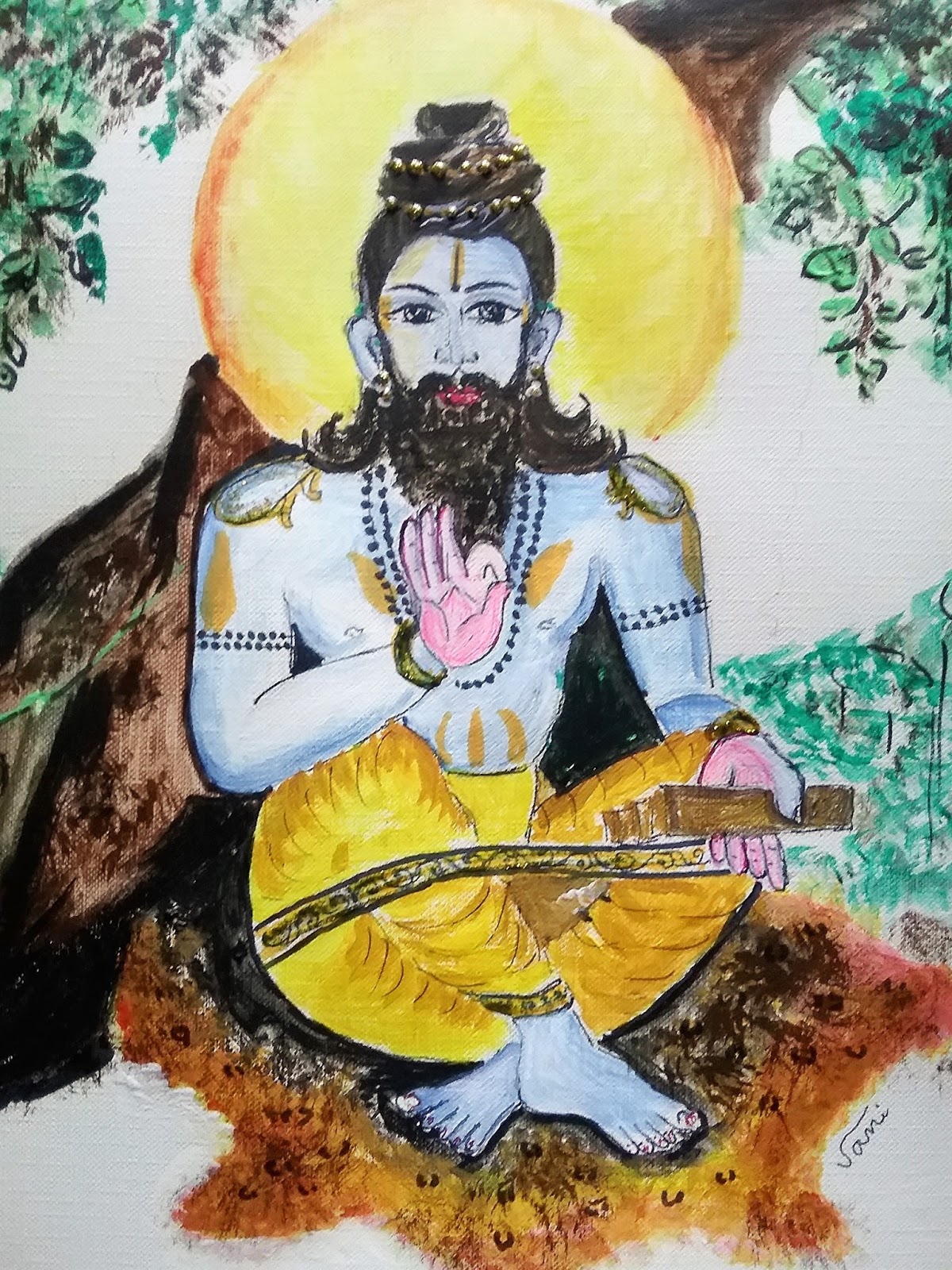
Verse 15
“Seven were his altar sticks, three times seven were the kindling bundles, when the gods, performing the sacrifice, bound the beast Purusha.”
This verse applies both to human beings and to the Planetary Logos, revealing a shared evolutionary pattern. When applied to humanity, it describes the process of initiation, the inward ceremonies that mark decisive stages in spiritual growth.
Initiation does not confer attainment; it recognizes attainment already achieved. Alice Bailey explains:
“This ceremony of initiation marks a point of attainment… it simply marks the recognition by the watching Teachers of the race of a definite point in evolution reached by the pupil.”
An altar stick aflame symbolizes initiation because initiation is, in Bailey’s words, “a blaze of illumination.” The seven altar sticks indicate that humanity faces seven initiations on its evolutionary journey. Their unlit state in the verse suggests that these initiations lie ahead, not at the beginning of evolution.
Bailey confirms this structure:
“There are five initiations ahead of the disciple, with two more ahead of the Master, making in all seven initiations.”
After the fifth initiation, the human being becomes a Master—a member of the spiritual kingdom—and becomes eligible for the final two initiations.
Three Times Seven: The Triple Evolutionary Scheme
The phrase “three times seven were the kindling bundles” is deliberate. While some translators reduce it to the number twenty-one, its symbolic meaning is far richer. As Sri Aurobindo observes, the number seven is fundamental in Vedic thought, representing completion and the totality of principles governing existence.
If seven symbolizes a complete evolutionary scheme, then three sets of seven indicate three interwoven evolutionary streams. Helena Blavatsky clarifies this structure:
“There exists in Nature a triple evolutionary scheme… the Monadic (or spiritual), the intellectual, and the physical evolution.”
These three streams are not separate journeys but interdependent processes, sharing common milestones—initiations—while unfolding through different vehicles of consciousness.
Hierophants and the Prison of Form
The verse also introduces the presence of hierophants, the administrators of initiation. The term originally referred to the chief priest of the Eleusinian Mysteries but is used by Bailey to describe the presiding consciousness at an inward initiation. The identity of the hierophant depends upon the initiation being taken.
Bailey explains:
“At the seventh initiation… the Logos of our scheme becomes the Hierophant.”
Thus, the Planetary Logos Himself administers the final initiation of humanity.
The verse also speaks of Purusha being “bound,” symbolizing the condition of incarnation. Humanity is described as “prisoners of the planet.” This imprisonment, however, is not punitive—it is educational. Bailey writes:
“Into the prison house of form enter all that live… This produces a gradual growth towards self-expression, self-appreciation, and self-realization.”
Liberation becomes possible only after the lessons of form are fully assimilated.
The same symbolism applies to the Planetary Logos, who is also described as a prisoner—bound within planetary existence until His own initiatory objectives are fulfilled.
Sacrifice as the Law of Ascent
Verse 16
“The gods sacrificed with the sacrifice to the sacrifice. These were the first rites. These powers reached the firmament, where the ancient demi-gods and the gods are.”
This verse reveals the deepest metaphysical principle of the Purusha Sukta: sacrifice operates hierarchically. Each greater life sacrifices itself for a still greater whole.
From a theosophical perspective:
- The Planetary Logos sacrifices Himself with the other Planetary Logoi
- This group sacrifice serves the will of the Solar Logos
- The Solar Logos, in turn, sacrifices Himself to an even greater Cosmic Logos
These relations reveal a universe structured according to hylozoism—the doctrine that all substance is alive and composed of hierarchies of sentient beings. Bailey explains:
“The hylozoistic theory recognizes no inorganic matter anywhere in the universe… all forms are built up of infinitesimal lives, which in their totality constitute a Life.”
Thus, the atom, the human being, the Planetary Logos, and the Solar Logos are all composite lives, nested within still greater lives.
Sacrifice as Prototype for Human Action
The verse declares, “These were the first rites,” indicating that cosmic sacrifices are models for human behavior. Blavatsky generalizes this law:
“Life is built up by the sacrifice of the individual to the whole.”
For human beings, sacrifice begins modestly—with family, community, or nation—but gradually expands toward planetary service. Bailey describes this final orientation as:
“The conscious sacrifice of all to the furthering of the plans of the Planetary Logos.”
Each voluntary sacrifice leads to expansion of consciousness. Advancement is never forced; it is always the outcome of freely chosen self-offering.
Author’s Conclusion
The Purusha Sukta provides one of the earliest and most comprehensive accounts of cosmic operation, planetary history, and human destiny. It presents a unified vision of:
- The relationship between humanity and the Planetary Logos
- The transformative power of divine sacrifice
- The stages and purpose of human evolution
Helena Blavatsky affirms the authority of this ancient wisdom:
“The Rig Veda, the oldest of all the known ancient records, may be shown to corroborate the occult teachings in almost every respect.”
The Purusha Sukta and modern theosophical writings thus function as independent witnesses that converge upon the same truths. As Paul states:
“In the mouth of two or three witnesses shall every word be established.” (2 Corinthians 13:1)
Taken together, these witnesses strengthen our confidence that the Purusha Sukta is not a relic of early ritualism, but a precise metaphysical revelation—one that continues to illuminate the purpose of evolution and the destiny of humankind.
🌿 Series Complete
With this final article, the Purusha Sukta series (101–104) stands complete:
- Being
- Sacrifice
- Human Evolution
- Cosmic Fulfillment